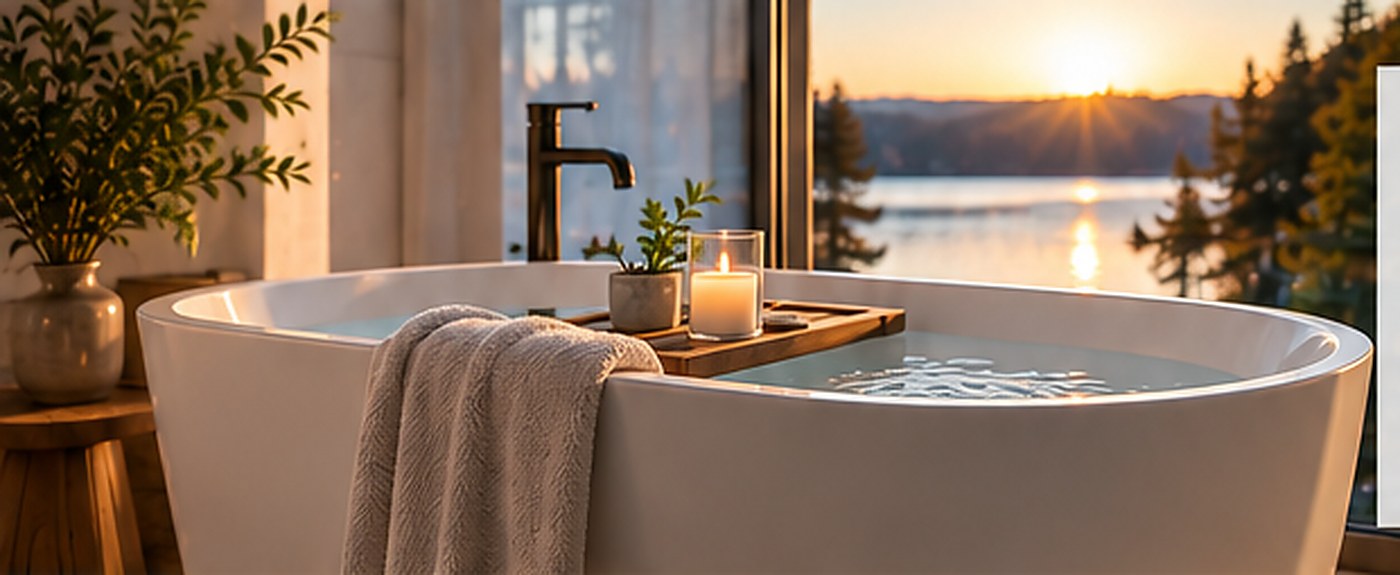
Choosing between a freestanding bathtub and a built-in bathtub is about more than appearance. The two styles use bathroom space differently, install differently and create a very different feel in the room. The right choice depends on your layout, how you like to bathe and what matters most in your renovation.
Both styles can make excellent soaking tubs. Here is the practical difference.
The basic difference
Freestanding bathtub
A freestanding tub is finished on all visible sides and sits as an independent fixture in the bathroom. It can become a focal point and often gives the room a more open, furniture-like appearance.
- Finished exterior on all sides
- Flexible visual placement
- Strong design impact
- Often chosen for larger or more open bathrooms
Built-in bathtub
A built-in tub is installed against framing, walls, a deck or a finished surround. Alcove, skirted and drop-in tubs all fall broadly into this family.
- Integrates into the room structure
- Efficient use of wall space
- Can provide ledges or surrounding surfaces
- Often practical for tighter bathroom layouts
Side-by-side comparison
| Consideration | Freestanding | Built-in |
|---|---|---|
| Visual style | Statement piece with exposed exterior | Integrated, architectural look |
| Space use | Usually benefits from breathing room around the tub | Can make efficient use of walls and corners |
| Installation | Requires careful floor placement and plumbing planning | Requires framing, surround or finished enclosure depending on style |
| Cleaning around tub | Floor around the tub may need access for cleaning | Fewer exposed gaps around the tub in many installations |
| Storage / ledges | Usually limited unless nearby furniture or shelving is added | Surrounds and decks can create useful ledges |
| Design flexibility | Excellent for creating a focal point | Excellent for integrating with tile, cabinetry and wall finishes |
| Best fit | Open bathrooms and design-led renovations | Space-conscious layouts and highly integrated bathrooms |
1. Start with the room, not the tub
A beautiful tub that crowds the room will not feel luxurious once it is installed. Measure the usable floor area, door openings and the clearance you want around the tub before falling in love with a particular style.
Freestanding tubs tend to look best when they have enough room to read as a separate fixture. Built-in tubs can use walls, corners and alcoves more efficiently, making them especially useful when every inch matters.
2. Think about cleaning and everyday use
A freestanding tub can expose floor space behind or beside the shell. That can look beautiful, but those areas still need to be reachable for cleaning.
A built-in tub often eliminates those gaps. A tiled surround or finished skirt can also provide a place for soap, bath products or a towel.
3. Comfort and soaking depth matter more than style alone
Freestanding does not automatically mean deeper, and built-in does not automatically mean shallower. Look at the actual interior bathing dimensions, overflow height, backrest angle and usable soaking depth.
If long baths are important to you, those measurements can matter more than whether the tub is freestanding or built into a surround.
4. Plumbing and installation can change the decision
The room itself may make one style easier. Existing drain location, floor structure, access below the bathroom and faucet placement can all affect installation.
A freestanding tub may use a floor-mounted or wall-mounted filler depending on the design. A built-in tub can often integrate plumbing into a wall or deck. Your contractor or plumber can usually tell you early which arrangement will be simplest in the space.
5. Which one works better as a heated soaking tub?
Either style can make sense. Vanderstil's heated-shell approach is about the bathing experience rather than forcing the homeowner into one particular tub shape. The goal is the same: help the bath remain warmer for longer while keeping the quiet feel of a soaking tub.
That means the better question is not “Which style is heated?” but “Which bathtub style fits my bathroom and the way I want to soak?”
Which should you choose?
Choose a freestanding tub if you want the bathtub to be a major visual feature, have enough room around it and like the clean, sculptural look of an independent fixture.
Choose a built-in tub if space efficiency, integrated storage, easier use of walls or a more architectural installation matter more.
Neither one is inherently better. A well-chosen built-in tub can feel every bit as premium as a freestanding tub, while a freestanding model can transform the look of the room when the layout supports it.
A warmer way to soak — in the style that fits your room.
Explore Vanderstil heated soaking tubs and compare freestanding, back-to-wall, built-in and corner configurations.