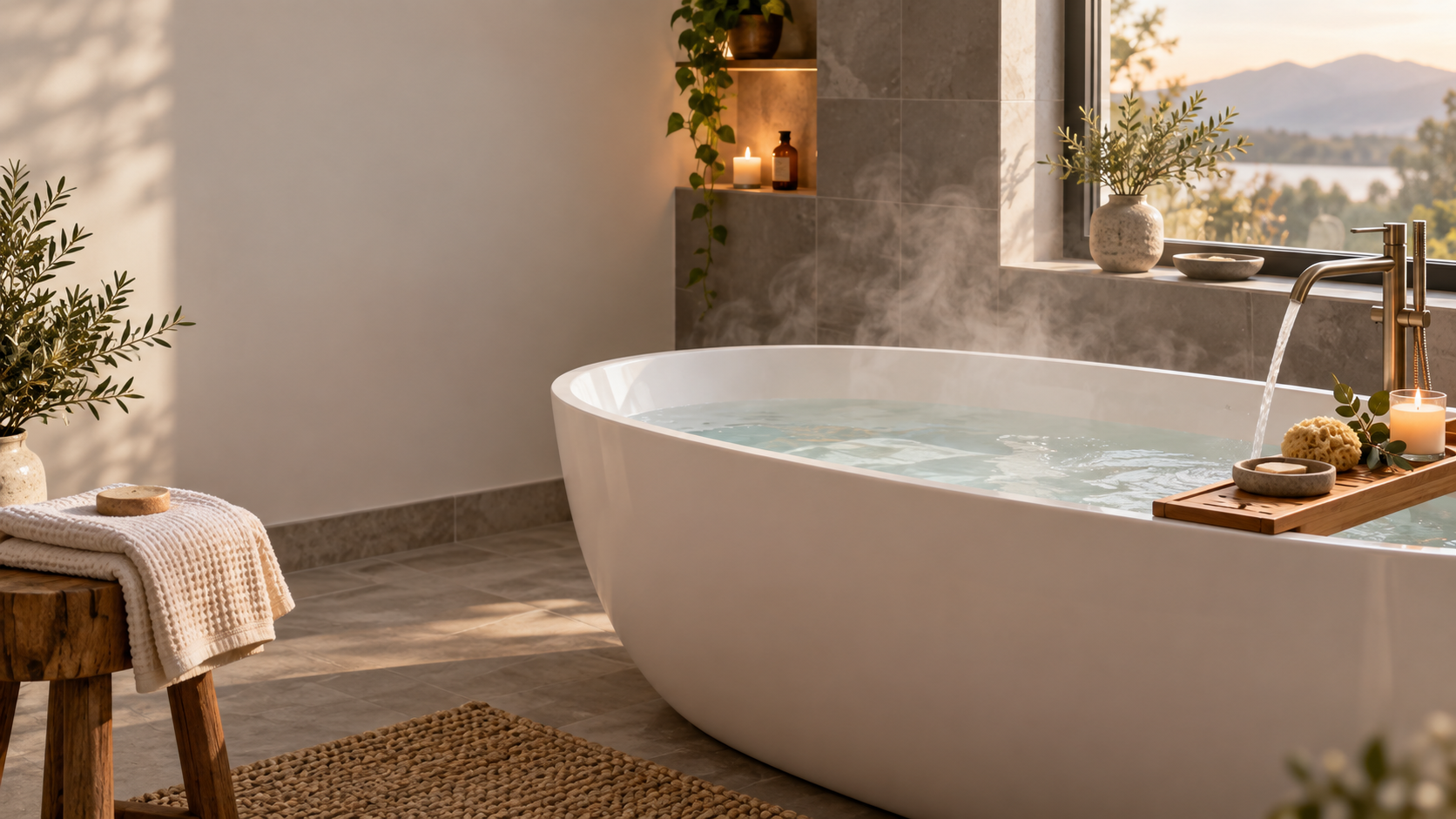
There is nothing particularly relaxing about settling into a hot bath only to realize 15 or 20 minutes later that the water is already getting cold.
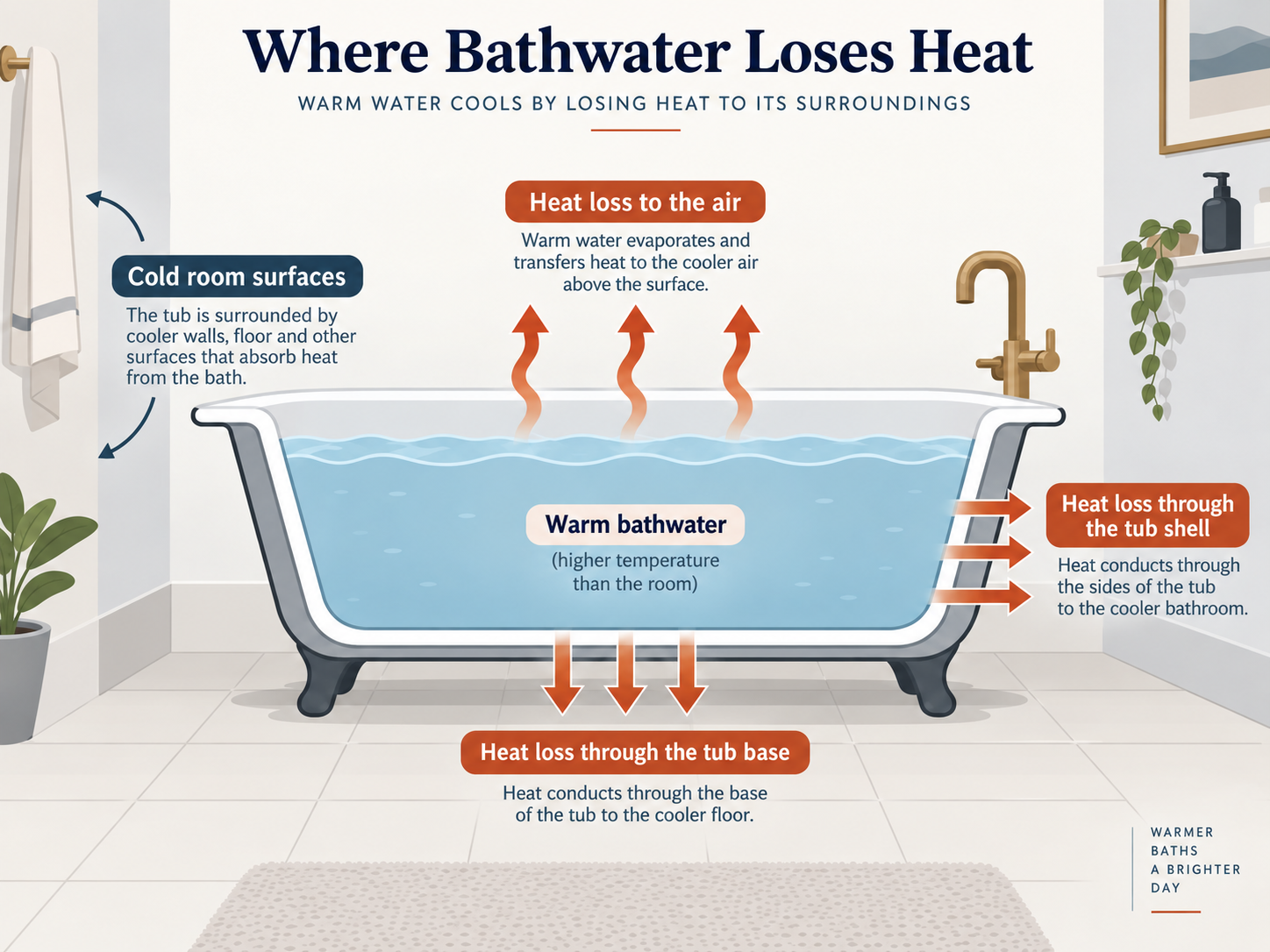
All baths lose heat. Warm water transfers heat into the tub itself, the surrounding air and nearby surfaces. Heat is also lost from the exposed surface of the water. The question is not whether a bath will cool down — it is how quickly.
Fortunately, there are several practical ways to slow that process.
1. Warm the bathroom first
A cold bathroom makes your bath work harder. If the room, floor, walls and tub are all cold when you start filling it, some of the heat from the water immediately begins warming those surrounding surfaces.
Bringing the bathroom to a comfortable temperature before filling the tub can reduce that initial heat loss. Even closing the bathroom door and avoiding cold drafts can help.
2. Pre-warm the bathtub
The bathtub itself can absorb heat when hot water first hits a cold shell.
One simple trick is to rinse the tub briefly with warm or hot water before filling it. You do not need to fill the tub twice — the goal is simply to take some of the chill out of the tub surface before your actual bath begins.
This can be especially noticeable in a cool bathroom or in a tub that has been sitting cold for hours.
3. Start at a comfortable temperature
Starting with water that is already lukewarm means you have less stored heat to begin with.
That does not mean making the bath excessively hot. The goal is a comfortable starting temperature that gives you some room for gradual cooling without becoming uncomfortable. Follow normal hot-water safety precautions and avoid water temperatures that are unsafe for the bather.
4. Use enough water
A deeper bath contains more warm water, which means more stored thermal energy. That generally helps the bath resist temperature change better than a very shallow fill.
This is one reason deeper soaking tubs can be appealing for people who enjoy longer baths: besides comfort and immersion, the larger volume of water can help provide a more stable bathing experience.
Deeper filling should always remain within the tub manufacturer’s intended fill level and overflow design.
5. Reduce heat loss through the tub itself
Not all bathtubs manage heat in the same way. The tub material, surrounding construction and insulation can all influence how quickly heat moves away from the bathwater.
An uninsulated tub in a cold space can allow more heat to move into the surrounding structure. A well-insulated tub helps reduce that loss.
When comparing tubs, people often focus on appearance, dimensions and price. For someone who takes long baths, thermal performance is worth considering too.
6. Add a little hot water when necessary
This is the traditional solution: drain a small amount of cooler water and replace it with hotter water.
It works, but it also uses additional hot water, creates temperature swings and can interrupt the bath several times.
For an occasional long soak that may not matter. For someone who regularly spends 45 minutes or an hour in the tub, constantly topping up the bath can become annoying.
7. Use a bathtub designed to help maintain temperature
Rather than repeatedly adding hot water, a heated soaking tub can help address one of the places heat is being lost: the bathtub shell itself.
Vanderstil heated soaking tubs use an integrated electric heating system that warms the tub shell, helping maintain bathwater temperature as you soak.
The system is thermostatically controlled and designed for quiet operation without the jets or circulating pump associated with a whirlpool tub.
That distinction matters. A Vanderstil heated soaking tub is intended to preserve the quiet simplicity of a traditional soaking bath — not turn it into a hot tub.
What works best?
For most people, the best results come from combining several approaches: keep the bathroom comfortable, start with a warm tub, fill to an appropriate soaking depth, reduce unnecessary heat loss and choose a tub designed around good thermal performance.
There is no need to turn a relaxing bath into a complicated science experiment. The goal is simply to slow the normal paths through which your bath loses heat.
A different kind of soaking tub
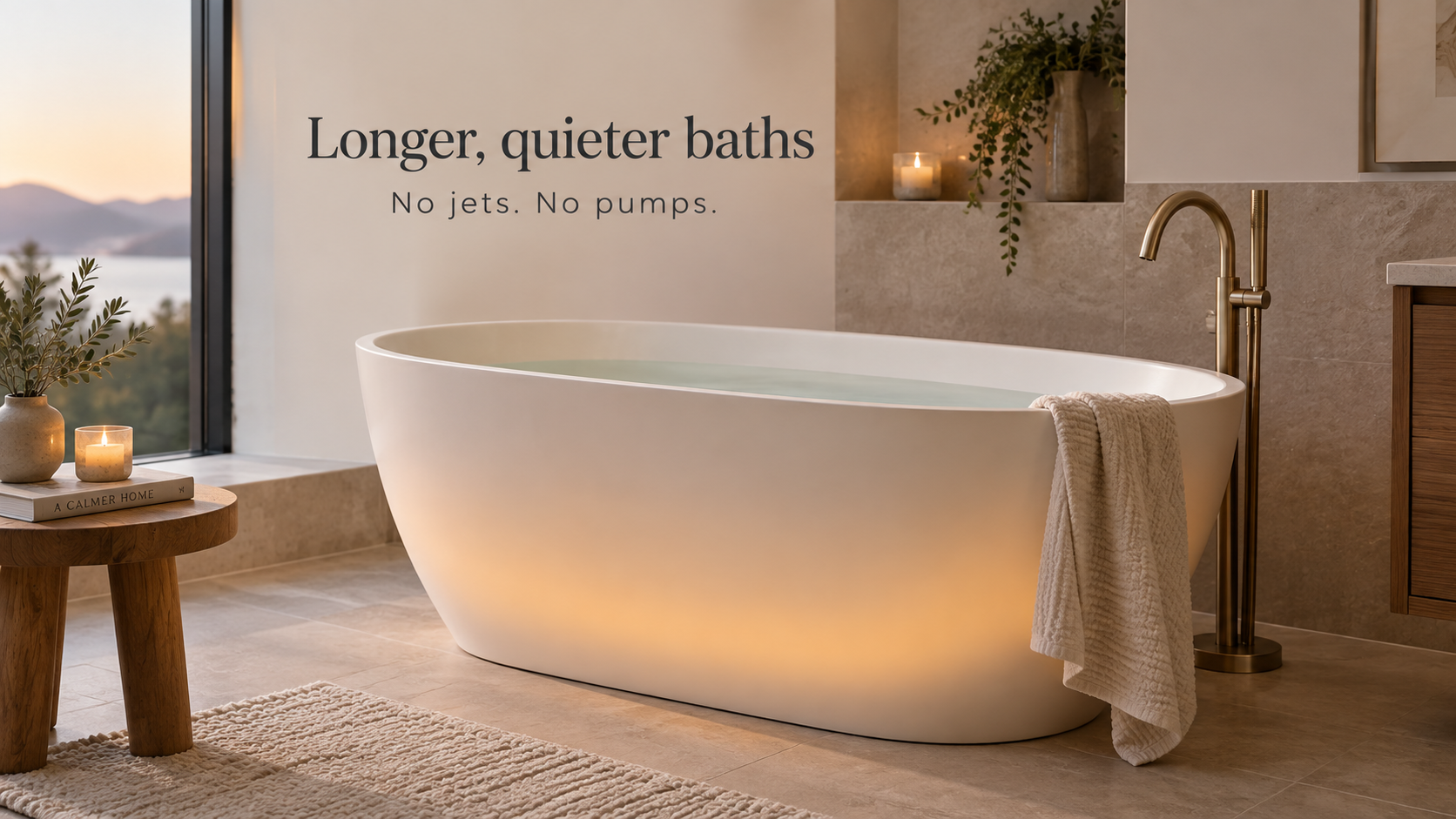
Vanderstil is developing Canadian-designed heated soaking tubs for people who want longer, quieter baths without relying on jets or a circulating pump.
The Vanderstil system warms the bathing shell and helps keep bathwater warmer for longer, while maintaining the simple, quiet feel of a traditional soaking tub.